2007 Year of the Widget – Newsweek
While Time focuses on people creating content in a very personal way, Newsweek focuses on people distributing content in a very personalized way.
Sean Stroupe has a fairly typical MySpace page in that it’s fairly atypical. His profile is tricked out with a song that plays whenever his page is reloaded, two slideshows from recent parties, a couple of YouTube videos that caught his fancy and an audio message from his mother, posted with just a twinge of irony. “You want to make it as interesting as possible. Or as fun,†he says of customizing one’s profile. Millions of MySpace members dress up their pages with videos, music, photos and more. And the technology that makes it all possible is so easy to use that, like Stroupe, many MySpacers didn’t even know they were using it. But each movable part of Stroupe’s profile is there thanks to a widget. Get used to that word.
If you sit in front of a computer at work, chances are there are certain Web sites that you monitor throughout the day, every day—to check e-mail, weather, stock portfolios or sports stats. But, thanks to widgets, taking multiple steps to track down headlines in one place and then check your e-mail in another may seem woefully outdated this time next year. These mini-applications—also called “gadgetsâ€â€”are simple bits of code, easily dragged onto a desktop or pasted into a personal page, where they are constantly updated with whatever information you want. “It’s the exact opposite of what the Web used to be,†explains Om Malik, a tech journalist and founding editor of gigaom.com. Last month Malik and Niall Kennedy, another tech blogger, organized and hosted Widgets Live—an entire sold-out conference devoted to the topic (in, where else?, San Francisco). “Widgets,†he says, “bring the Web to you.†Think of it as tech jewelry—bling for your blog; ice for your desktop.
As much as I hate autoplay on MySpace, I love widgets. In the spirit of atomizing the Web for mashability, here’s a widget of my blog to place on your site. Use it to spice up your blog, profile, pornsite, whatever.

(Via Steve Rubel.)
Wikipedia to Launch Google Rival
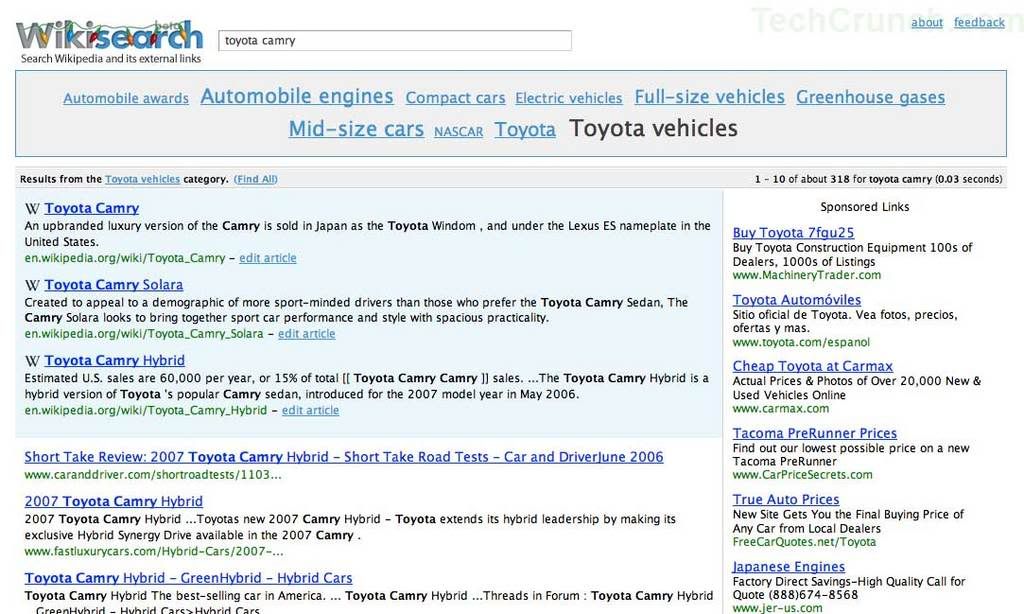
Considering that Wikipedia founder Jimmy Wales used to run erotica galleries and a babe blog, and currently runs a babe search engine, I actually trust the guy to build an accurate general search engine. It takes a special kind of honesty to show the world its own sensuality.
Mr Wales has begun working on a search engine that exploits the same user-based technology as his open-access encyclopaedia, which was launched in 2003.
The project has been dubbed Wikiasari — a combination of wiki, the Hawaiian word for quick, and asari, which is Japanese for “rummaging search�.
Mr Wales told The Times that he was planning to develop a commercial version of the search engine through Wikia Inc, his for-profit company, with a provisional launch date in the first quarter of next year.
Search results will include tag based navigation, the top three results will be wikipedia content, and the remaining results are determined by sites wikipedia considers to be “reputable� because they are external reference links from wikipedia pages.
Since all search results will be tied to wikipedia, either directly by linking to wikipedia content or because the sites are linked to from Wikipedia, real people will eventually be determining all search results and rankings within Wikiasari. The search engine will be opensource, and the index will be available under a GFDL. Wikia will operate the master version of the index, but others are free to take it under the terms of the GFDL.
Wow, free search engine code and index. You could build all sorts of custom search services on those. With Wikipedia’s popularity behind the project, expect an explosion of plugins and forks once they’re out. I’m a huge Google fan, but people who can’t wrap their brains around Google’s algorithms might prefer a human-edited version of the wisdom of the crowds.
I’m staying with Google for its all-inclusive crawling power, and recommending Wikiasari to people who need the benefit of SERPs backed by human editors. The latter is still a huge market.
(Via Hugh MacLeod and Michael Arrington.)